Up next in 10


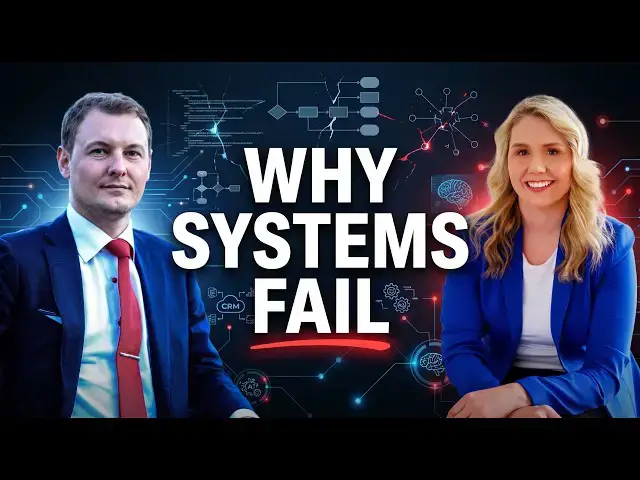
Why do technology and business systems fail even when companies invest heavily in the right software?
Laura Early, Founder and Chief Experience Officer of WISE Advise + Assist Team, has worked with more than 700 businesses and has seen the same problems repeatedly: unclear objectives, poor communication, inadequate training, weak delegation, and software selected without fully understanding what the business actually needs.
In this episode of Build With What You Know, Laura explains what happens behind the scenes when companies try to scale — and why the technology itself is often not the real problem.
We discuss:
• Why companies need to audit their internal systems before scaling
• The role of project management, CRM, communication and automation tools
• Why AI and automation still require human oversight
• Why software implementations often fail to deliver their expected ROI
• How poor communication creates expensive project failures
• Why one short software training session is rarely enough
• How to get teams genuinely involved in technology implementations
• Why successful projects start with alignment and a pre-mortem
• How distributed teams can make better decisions through structured communication
• The three things Laura recommends before a company tries to scale
One of the strongest points from the conversation is that taking more time at the beginning of a technology project can actually make the project faster overall. Teams need to understand not only what they are doing, but why, who it affects, and what happens if it goes wrong.
Laura also shares how WISE has built a distributed business around military spouses, veterans and remote work — creating systems that allow the company to operate without everyone being in the same room.
Connect with Laura and WISE Advise + Assist Team:
Website: https://www.wiseadviseteam.com/
Watch the full conversation and explore more episodes of Build With What You Know.
#Technology #AI #DigitalTransformation #BusinessSystems #Automation #RemoteWork #BusinessGrowth #Tech
Show More Show Less View Video Transcript
0:01
Hello, everyone.
0:03
>> Hi, how are you?
0:04
>> I'm good, thanks. I'm I'm eager to learn
0:08
more about scaling, and you've built
0:10
some systems to help over scaling up.
0:14
Can you tell me more about it?
0:16
>> Yeah, so I'm a founder of a business
0:20
growth agency. We've been in business
0:21
for about 10 years and have worked with
0:24
over 700 businesses. And what we do is
0:26
partner with them to help them grow and
0:28
scale, cuz I find that a lot of small
0:30
businesses specifically don't always
0:33
have the strategic insights or tools to
0:36
be able to do so. They get really
0:38
hyper-focused maybe on their brand or on
0:41
posting on social, all kind of the
0:43
outward-facing things of their business.
0:45
They're, you know, making their product
0:47
the best it can be or their service,
0:48
which all those things are important.
0:50
But if you're not building the internal
0:52
systems and processes to support what
0:55
you're doing in the marketing and in the
0:57
product, you're not going to be able to
0:59
grow and scale at the rate that you
1:01
want. Because if you start selling
1:02
hundreds of thousands of products
1:04
overnight, if you don't have the
1:06
back-end systems, the support team as
1:08
well, to do that, you're not going to be
1:10
able to sustain that growth. And I find
1:13
that a lot of business owners are are
1:15
not focused internally where they need
1:17
to be and making sure that they have
1:19
what they need as a business in order to
1:22
scale, whether it's software, people, or
1:24
process.
1:26
>> Exactly, each business have different
1:28
needs. So, uh
1:29
>> Right.
1:30
>> Are there some systems that actually
1:32
work for any kind of business?
1:35
>> Yeah, I would say I think software it
1:38
can be a little bit specific to your
1:39
type of business, but the types of
1:42
softwares that you need are not. A
1:44
really solid project management tool, a
1:46
good CRM,
1:49
um a good, you know, invoicing payment
1:51
system is really important. Now, there's
1:54
hundreds of different types of those,
1:56
and there's different ones for different
1:57
industries, but if you don't have those,
2:00
I would say that that's a great place to
2:02
start and making sure that you have some
2:04
sort of communication system within your
2:07
team, whether that's, you know,
2:08
Microsoft Teams or Slack or
2:11
um I'm sure there's others out there,
2:13
but I know those are the two most
2:14
popular in terms of communication
2:15
internally. Then making sure you have
2:17
that set up and that everyone has
2:20
access, they have the permissions that
2:22
they need, and you have some protocols
2:24
around it. How do you add and take away
2:26
things from the softwares? What are they
2:28
connected to? Who's checking on those
2:31
connections and automations? Because
2:33
automations break. Uh they don't always
2:35
flow well, especially now with the
2:36
introduction of AI. There's so many
2:38
things that you can integrate and
2:39
automate and build into an agent, but
2:41
someone has to check those and make sure
2:43
that they're working, and make sure that
2:45
the um text or content that's going out
2:47
to clients and customers is um on brand
2:50
with the business and makes sense for
2:52
whatever the process might be.
2:55
>> Mhm. What is the average timeline?
3:00
>> For for the analysis process?
3:03
>> Yes.
3:04
>> Uh I I think I mean, you can employ
3:06
good, solid systems within 3 months if
3:09
you have an idea of what you do and
3:12
you've kind of audited already. I think
3:14
the first step is an audit of where do
3:16
your processes break down? Where do
3:19
things take um significantly more time
3:22
than they should? And that's where I
3:25
find is the best place to start when
3:26
you're building internal systems or
3:28
adding in a person. The same goes for
3:29
delegation. People are like, "Well, when
3:31
is it time to add a new staff member?"
3:35
Well, it's time when you have, you know,
3:38
enough for them to do. You have a clear
3:40
responsibility list and role that's not
3:42
being fulfilled and you can articulate
3:44
that to someone, and then obviously
3:46
having the means in order to pay them as
3:48
well. And so, you have to do a little
3:49
bit of an audit of your own business to
3:52
assess
3:53
um
3:54
where are you, what do you have, how do
3:56
you know what you need, or do you need
3:57
to hire someone to come in and do that
3:59
audit for you? Do you just not have the
4:01
the perspective, the foresight, that
4:03
helicopter view to be able to say, "This
4:05
is where the real problem is."?
4:07
>> Yes, then
4:09
do you intervene at each step?
4:11
Including the pre-audit?
4:14
>> Yeah, we do. Something that's really
4:15
unique about our company is we do both
4:17
advising and assisting. So, we do the
4:21
strategic part and also the
4:23
implementation, or we'll do one or the
4:25
other. For a lot of clients, we do both,
4:26
and then for some clients, we just come
4:28
in and do the strategic audit and
4:29
assessment, give them a 90-day plan of
4:32
how to build tools and implement them,
4:34
and then they take it and do it. And
4:35
then for other clients, they want that
4:38
support and implementation because they
4:39
want someone else to do it for them. And
4:41
then we also offer the ongoing
4:44
assistance. So, whether that's in
4:45
marketing or operations, that ongoing
4:48
person that's going to make sure that
4:50
your administrative systems are running
4:53
well, or your marketing, your social's
4:54
going out, your email funnels are
4:56
working, they're converting, your ads
4:59
are are producing as well. So, those are
5:01
all the things that you need to be
5:02
consistently kind of looking at
5:03
quarterly to make sure things are are
5:05
still working the way they should, and
5:06
they're things are converting the way
5:08
they should as well.
5:09
>> It needs so many different skills.
5:12
You're You're talking about.
5:14
>> And
5:15
it is.
5:16
>> What are the the main bottlenecks you
5:18
usually see at clients?
5:21
>> Um I mean, the first one is just that
5:23
people are tend to be delegating for
5:26
just the task, and they're not actually
5:28
trying to get people
5:30
in line with their business. So, their
5:31
team needs to understand not only the
5:33
task itself, but
5:35
what do they have the authority to do?
5:37
What decisions do they have the
5:38
authority to make? And then also, they
5:40
need to understand the impact on the
5:42
business. And Brené Brown talks about it
5:44
like the five C's of um of delegation.
5:47
Like, you need context, you need color,
5:49
connective tissue, cost, and they need
5:51
to understand the consequence. So, a lot
5:53
of times what I see with um
5:55
with executives or with founders is that
5:58
they're just throwing tasks out even if
6:01
it's in a software. Like, I want the
6:03
software to do this, but they don't give
6:05
the full picture of what's actually
6:06
needed or the cost for the organization.
6:08
And so, things get half done and or not
6:12
done correctly and then that costs time
6:13
and money and they get frustrated and
6:15
they end up just doing it themselves
6:18
because they're so annoyed with with
6:19
that. So, really that one of the biggest
6:21
problems I see is um people say they
6:23
want to build a business for scale or
6:26
they want to build a business for
6:27
freedom or they want to get out of the
6:29
day-to-day, but a lot of times how they
6:31
are setting up the tasks and systems
6:34
within their company is not actually set
6:35
up to um delegate. It's not
6:39
understanding, not building a structure.
6:41
They're just throwing tasks.
6:43
>> Yeah, exactly. That's what I also seen
6:45
in my experience.
6:46
Um
6:47
>> Yeah.
6:47
>> What what's usually missing in um in any
6:50
type of project is clear communication
6:52
and involvement of everyone.
6:55
>> Right. Yeah, clear communication is so
6:57
important. I I hear it all the time. I I
6:58
was actually on a coaching call
6:59
yesterday and someone was like, "Well,
7:00
I'm I was clear." And I'm like, "Well,
7:03
if the other person doesn't understand
7:05
what your intention was, you weren't
7:06
clear." Like, clarity is not a one-sided
7:08
thing. Communication is not a one-sided
7:10
thing. And a lot of times we think it
7:12
is. Oh, well, I was very clear in my
7:13
communication. I told them exactly what
7:15
I wanted. Well, you have the years of
7:18
experience, you have the context, you
7:20
understand the consequence on the
7:21
mission, you have all that innately in
7:22
your brain. It takes you 3 minutes
7:23
probably to figure it out. But, this
7:25
other person that you're delegating to
7:27
or talking to, they don't have all of
7:29
that. They haven't been in the role as
7:30
long as you have. Maybe they don't know
7:32
all those things. And so, that's
7:33
something that I see all the time is
7:34
people don't want to take the time and
7:36
it takes very intentional time in the
7:38
beginning with a new employee or a new
7:41
partner or new agency to one build
7:43
trust, but two build understanding and
7:46
build a workflow. And if you take that
7:48
time up front, it makes things faster
7:51
and more efficient in the long run, but
7:52
a lot of time people don't want to take
7:53
that time up front. And what they don't
7:55
realize is they're going to spend that
7:56
time at some point either with that
7:59
person that they've hired or with that
8:02
system or they're going to end up firing
8:03
that person and doing it again with
8:04
someone else when they get tired of
8:06
them. So, the time is spent. It's just
8:09
where do you want to spend it? You want
8:10
to spend it fixing the situation or do
8:11
you want to spend it in the beginning
8:13
really building with intention and
8:15
making sure that it's
8:16
everyone understands and is on the same
8:18
page. And that comes with creating an
8:20
environment where people can ask
8:21
questions, creating environment where
8:23
people can push back on the idea and the
8:25
strategy. And for you as the executive
8:28
to be open to that feedback and to be
8:30
open to questions and understanding that
8:32
questions doesn't mean that someone's
8:34
incompetent. Questions mean that
8:35
actually they're incredibly
8:38
competent. They want to understand what
8:40
you're looking for.
8:42
>> Exactly. You're actually highlighting
8:43
the importance of proper workshops. Put
8:46
everyone really together.
8:49
Let them allow some time for real deep
8:52
communication and understanding of
8:54
everything involved in the in the
8:56
project, the new processes, the people,
8:59
the the goals.
9:01
>> Right.
9:03
>> And so, do you also organize
9:06
workshops?
9:08
>> Um we do. I mean, we do sessions at
9:10
conferences and things like that. We
9:11
don't actually do a lot of workshops
9:14
um
9:14
one-on-one. It's something that we've
9:15
talked about as an organization, but we
9:17
will with a company. So, if a company
9:18
hires us, we'll sit down with their team
9:20
and workshop, you know, within their
9:22
organization on these things if we're
9:23
going to be building out a system for
9:25
them, but it's not something that we
9:27
just offer to, you know, everyone in the
9:29
community.
9:30
>> And because you mentioned a lot of
9:32
software systems, but
9:36
often we the companies think that just
9:39
one short technical training is enough
9:42
for everyone to be up to speed and I
9:45
guess you
9:46
your experience shows otherwise.
9:48
>> Yeah, I would say I mean it just
9:50
depends, right? Like not everyone is
9:52
tech-savvy, right? So some people learn
9:54
the software really quickly, some people
9:56
don't. If you've worked in one CRM, you
9:57
probably can figure out most, but are
10:00
you using it to its full potential? Are
10:02
you optimizing everything within that
10:04
platform? Probably not.
10:06
So right now, for example, our company
10:08
is changing softwares within the
10:09
organization. We have three trainings
10:12
scheduled
10:13
that not they're not man One is
10:15
mandatory for everyone to attend and the
10:17
others are optional. They're Q&A
10:18
sessions, their ability for people to
10:20
come in and and figure it out because
10:22
watching someone do something, which is
10:24
usually what a software training is,
10:25
it's watching someone on your screen do
10:27
it. Most of the time people don't learn
10:29
that way. They need to practice, they
10:30
need to do it themselves. And so what I
10:33
encourage is like at least get people
10:34
access to their accounts. So if they're
10:36
going to watch they can like follow
10:37
along in their own account to be able to
10:40
see what they're doing, but it takes
10:41
time to understand. You typically have
10:42
to hear something like seven to 10 times
10:44
to actually commit it to memory. So
10:46
I find that people do inadequate
10:48
training or they just tell people here's
10:50
here's the new process, here's the new
10:52
system, here's the SOP.
10:54
Go learn it, we'll see you tomorrow, we
10:56
hope you're experts.
10:57
And that really doesn't support your
10:59
team and their understanding and it can
11:01
be a
11:02
kind of a waste of your investment
11:04
because if you're not maximizing
11:06
like I said, the platform for what it
11:08
can do for you and you don't have team
11:10
members and staff that understand how to
11:12
use it, you're spending a lot of money
11:15
on something that you may not be getting
11:17
the right return or the return that you
11:18
expect because you haven't put the time
11:20
in. Again, it's the same with delegating
11:22
to a person. You have to spend the time
11:23
up front to really understand, learn,
11:26
create create the right process and then
11:28
people will be able to go off to the
11:30
races and use it, you know, like a
11:31
high-speed train.
11:33
>> Yeah, exactly. According to some of
11:34
Gartner research, 75% of implementation
11:38
projects fail to reach their initial
11:41
objectives. So, it's not always
11:43
real failure where the business
11:45
completely stops, but
11:47
as you mentioned, the return on
11:48
investment is not there or
11:51
not all the functionalities are used by
11:53
the people and
11:56
>> It can take longer. I think that that's
11:58
the other thing is like you can people
12:00
think that taking a lot of time in the
12:01
beginning to train or to understand is
12:04
going to just like stall the project.
12:06
And I I wish I could get more people to
12:08
understand if you take that time in the
12:09
beginning, the project's actually going
12:10
to go faster than having to stop in the
12:13
middle because you're not meeting the
12:14
objective. Or, you know, my favorite
12:16
part is when
12:18
you know, only the CEO knows what the
12:19
objective of it is and no one else does.
12:21
They haven't communicated what that
12:22
objective is. They're like, "We're not
12:23
meeting this objective." like, "Where is
12:25
that? Where is that in like your L10
12:27
meeting? Like, where is it in your staff
12:29
meeting? Have you told anyone that this
12:30
is the goal and that this is the
12:31
deadline and this is why that deadline
12:34
is important?" So, it all starts with
12:36
communication. And then I think you
12:38
know, time is money. I get that. I'm you
12:40
know, I'm a business owner, too. But,
12:42
you're going to you're going to spend
12:43
that money somewhere and I'd rather
12:45
spend it in the beginning getting
12:46
everyone set up for success than
12:47
spending it in the middle or, you know,
12:50
1 month from launch where it's
12:52
absolutely critical that we get this
12:53
right and we didn't train people in the
12:56
beginning. So, now we're going to have
12:56
to spend double to get them trained
12:58
right now before launching in, you know,
13:01
a couple of weeks.
13:02
>> Mhm. Exactly.
13:04
In your experience with your clients,
13:06
maybe you've you have seen some um
13:09
interesting stories?
13:12
>> Yeah, I've seen a lot of interesting
13:13
stories.
13:15
Um you know, I I've seen people go an
13:17
entire 6 months on a project with
13:19
misalignment around expectations and
13:21
understanding of what it is.
13:23
And I think that's only going going
13:26
it's getting more interesting with AI.
13:28
Like we were doing a um
13:31
a web build for someone recently and uh
13:34
we you know, we got like all the way to
13:36
the end. The wireframe's been approved.
13:37
We're building. We're coming in a round
13:39
of edits and uh they came out with like
13:42
an AI wireframe they built an AI and
13:44
they're like, "Actually, this is what I
13:45
want." I'm like, "But we've already gone
13:47
through like 2 months of design,
13:49
approval, and now we just want to change
13:51
it completely because you know, AI says
13:54
this should be the design." Um so that
13:56
was incredibly interesting and just
13:57
understanding that they were even using
13:59
it in that way. You know, there's just a
14:00
lack of communication in terms of like
14:02
what the expectation of the site was.
14:04
Um I've seen it with um you know, larger
14:06
companies building um you know, building
14:09
a product uh go to go to market product
14:12
and they're trying to train up their
14:14
software internal system, make sure
14:16
that, you know, the email funnels are
14:17
right, and
14:19
um
14:19
the customer payment system is working,
14:21
and all of that. And they get to like
14:23
again, they get to like 2 months out
14:25
from launch and someone asks them a
14:28
question in a meeting and they're like,
14:29
"Wait, what? Why would you think that?
14:31
That's not what we're That's not what
14:32
it's supposed to do. They're supposed to
14:34
be able to click here and click there
14:35
and do this and get this sequence." And
14:37
that's not what's built at all.
14:39
Um or the software's not capable of it.
14:41
That's the other thing that happens a
14:42
lot is people don't spend enough time
14:44
vetting a software platform and they'll
14:47
realize that maybe it's going to charge
14:49
your customer extra fees that you didn't
14:51
anticipate in the beginning. Maybe it
14:55
the base platform that you thought you
14:56
were going to pay for at a certain price
14:57
per month doesn't include all the
14:59
features that you wanted.
15:00
Um
15:01
that happens all the time. And so you
15:03
get like 3 months into building into a
15:05
platform and then realize the platform's
15:06
not the right fit. And you know, that
15:10
that's just that's not a fun
15:11
conversation with anyone of like, "Hey,
15:13
this platform that you picked is not It
15:15
doesn't do what you want it to do."
15:17
Um now I think we have more options with
15:19
agents now to be able to remedy some of
15:21
that without completely pivoting. Uh but
15:23
in the past we would have to completely
15:24
change a software. We would have to say
15:26
make a complete change in you know,
15:28
software's not cheap.
15:30
>> Yes, that's also.
15:32
And you know, on the other side
15:34
regarding um
15:36
the successful projects.
15:38
>> Yeah.
15:39
Yeah, I I mean I think successful
15:40
projects start with an aligned team. Uh
15:43
you know, it's everyone understanding
15:46
what are we doing, why are we doing it,
15:48
who are we doing it for, and what's the
15:51
impact for that customer, consumer, but
15:54
also what's the impact for our
15:55
organization if we don't get it right or
15:57
wrong, right? If we get it wrong. Um and
15:59
when you spend the time to make sure
16:01
that everyone's in that workshop, in
16:03
that dialogue, um I I really like the
16:06
idea of a pre-mortem where you have a
16:09
meeting and you all talk about what's
16:10
the worst thing that could happen. What
16:12
are all the failures that could happen.
16:15
And it gives an opportunity for you to
16:16
think through, have you thought through
16:18
everything that could potentially go
16:19
wrong. Um and maybe your engineer, they
16:23
probably have a different perspective
16:24
than your than your your head of
16:26
marketing. So it's really great to get
16:28
those people in a room and have this
16:29
sort of pre-mortem of what could go
16:32
wrong. And you can you can proactively
16:35
come up with potential solutions for
16:37
that before you even get started on the
16:39
project. And it gives an opportunity for
16:40
buy-in as well. Buy-in is huge with
16:42
people when you're working on a
16:45
um on any project, but especially a
16:46
large-scale project. If you don't have
16:48
buy-in and commitment from people, their
16:50
work is not always as good. Um
16:52
so that's important and that gives an
16:53
opportunity for everyone to kind of poke
16:55
holes, have conversation, and understand
16:58
the full picture of what you're doing as
17:00
an organization and then its importance.
17:02
So that's what I see most really
17:04
successful um
17:06
you know, projects from very small-scale
17:08
things to very large-scale launches uh
17:10
have in common is they're taking that
17:12
time up front to make sure that everyone
17:14
has understanding that's going to touch
17:16
it in some capacity. A lot of times
17:18
people talk to like the top three
17:20
C-level executives about it and that's
17:22
it. Like there's no other meeting with
17:25
everyone else in the support staff and
17:27
the implementers and the people who are
17:28
building it. And so things get lost.
17:30
It's like a game of telephone. Like a
17:31
little bit gets trickled down, but the
17:33
full picture doesn't doesn't hit the
17:35
person actually building or implementing
17:38
the thing. And so that's what I see with
17:40
really successful projects. They take
17:41
that time up front and then they
17:44
they have regular check-ins. They they
17:46
schedule whether it's a meeting or a
17:49
weekly bi-weekly email. They have some
17:52
sort of rubric that they use to check on
17:55
progress and success
17:57
throughout the project instead of
17:59
waiting 3 months and then be like,
18:01
"What's been happening last 3 months? Is
18:03
it on track? Are we off track? What's
18:04
going on?" You know, they're checking on
18:06
the progress regularly and so that their
18:10
one their team feels supported,
18:12
but also reiterates the importance of
18:14
whatever you're doing. Like if we're
18:15
checking on it regularly, it obviously
18:17
matters and it matters to us how it gets
18:19
done and and what it looks like. So I
18:22
really the the most successful projects
18:24
have have really dynamic conversation
18:27
and communication with everyone involved
18:30
in the project.
18:32
>> Exactly. That's also what I've seen in
18:34
the successful projects I participated
18:36
in. They had for example real kickoff
18:39
workshop where they really take everyone
18:43
talking here about like 400 persons
18:45
>> Right.
18:45
>> outside of the daily work habit in a in
18:48
a
18:49
external location where they are out of
18:51
their routine and they really take the
18:53
time to interact with each other and
18:55
they are not constantly stopped with our
18:57
I have to go back to the factory to
18:58
whatever I have this and that. But they
19:01
really focus on the project, on the
19:02
communication that is being given to
19:05
them and they really exchange. And then
19:07
they are
19:08
they are fully implicated in the project
19:10
from beginning to the end.
19:12
>> Yeah, they get really involved. I think
19:14
it's really important. Like you said,
19:15
they had 400 people involved. Again,
19:17
most people get like the top four or
19:18
five, but they don't bring everyone into
19:21
the room. And that's also how your how
19:24
your team learns. They learn from being
19:26
in the room with
19:28
the higher-level executives, the people
19:30
who are above the management, all of
19:32
that. That's how they learn is by
19:33
getting to be a part of these
19:34
conversations. Oh, wow. You know, he
19:37
asked that question and it was okay.
19:39
That was a really good question to ask.
19:41
I never have thought about that before.
19:43
So, that's how people learn, too, is
19:44
like by being in these conversations
19:46
because it also triggers you. Oh, gosh,
19:48
he asked about
19:50
um
19:51
runway and cost per click and I hadn't
19:54
considered that in this certain
19:55
circumstance. We should look at that.
19:57
Let's pull the data. We're all here
19:58
right now. Not only can you discuss it,
20:01
but you can make a decision cuz
20:02
everyone's in the same room instead of
20:04
we're a virtual team. So, it's like
20:06
pinging people back and forth and back
20:07
and forth to get an answer. Well, we can
20:10
That takes I mean, that can take like
20:12
hours of going back and forth if you're
20:14
waiting for people to respond,
20:15
especially if you're globally
20:16
distributed. And so, just being in the
20:18
same room saves a lot of time and allows
20:21
you to make decisions. It brings that
20:23
commitment, which I think is so huge.
20:24
Gets people involved and engaged.
20:26
So, I absolutely always recommend that
20:28
people workshop, whether it's in person
20:30
In person is great if you can do it,
20:33
but if you can't, at least do it
20:34
virtually.
20:35
>> Yeah, exactly. And then of course, the
20:37
issue is always the cost, but
20:40
people
20:41
rarely see the cost of a failed project
20:43
and it's usually much higher than
20:46
doing a real workshop, providing as much
20:49
training as necessary to everyone.
20:52
>> Yeah, I mean, I find that again, like
20:54
people don't
20:56
they if something's successful, they're
20:58
just happy about it. They don't actually
20:59
look at like what it cost to do that
21:01
successful project. And but they will
21:03
look at every single line item of a
21:05
failed one of like, oh gosh, well we
21:07
spend you know, 150 hours on training.
21:10
That just seems like a waste. But if you
21:11
actually go back and look at like your
21:13
most successful projects that you have
21:14
done
21:15
and and analyze them, which I've had to
21:17
do in the past. I've had to ask clients
21:19
when they're really frustrated in a
21:21
situation. I was like, I want you to
21:22
think about the most successful thing
21:23
that your company has ever done.
21:25
I want you to look at even you
21:27
personally as the executive, how much
21:29
time you spent, where what did you do?
21:32
How many conversations did you have? How
21:33
many emails did you send? Um, how many
21:36
um online classes or workshops did you
21:39
sit in to learn and understand a
21:41
platform? And that usually helps them
21:43
understand.
21:46
>> Yeah, that's a good one. Um, actually,
21:48
what would be your your top three tips
21:51
to companies that want to scale up?
21:55
>> Yeah, I really think it's um do an audit
21:58
of your organization and understand uh
22:00
where the bottlenecks are. What stops
22:02
functioning when you as the executive
22:04
are not around? And that's a really good
22:06
question to kind of launch that audit.
22:08
So, um take an audit, understand where
22:10
things are breaking down.
22:12
Um, then I would see look, you know, do
22:15
a financial analysis and look at what
22:17
your company needs. Like what what you
22:19
have available to you in resources and
22:20
also like what's draining you
22:22
financially as a company. I find a lot
22:24
of times that people don't have a clear
22:25
understanding of their books and numbers
22:27
and they don't understand actually um
22:30
the cost per sale and all of that. You
22:32
have to understand your your numbers in
22:35
order to make decisions about
22:36
implementation. And then um the third
22:39
thing I would say is um
22:41
bring your team together. Ask them.
22:43
Ask them what they think. When was the
22:45
last time you asked for feedback and you
22:46
asked them what they think you need to
22:49
do or what's failing. I same with
22:50
customers. When's the last time you did
22:51
like a customer feedback survey and you
22:53
got engaged and found out that feedback
22:55
of how whatever it is is landing and and
22:57
what they'd like to see from you. Cuz
22:59
typically the the easiest way um
23:02
you know, to scale is to upsell current
23:04
clients, not add in a whole portfolio of
23:06
new ones. Uh, and so if you're not
23:08
taking that time to, uh, really
23:11
understand the pain points of your
23:13
current client and what they need from
23:15
you, you're missing out on an
23:16
opportunity just to increase business
23:17
with what you already have.
23:19
Um, so I would say that audit, you know,
23:21
audit what's the bottlenecks, what's
23:22
breaking down, what's not working within
23:24
the organization, really get, um,
23:27
familiar and comfortable with your
23:28
numbers and understanding the actual
23:30
costs within your organization right now
23:32
and what sort of budget you do have in
23:34
order to invest in the next thing. And
23:36
then ask your your team and clients,
23:38
that's going to give you a better
23:39
understanding of what's breaking and
23:42
maybe what's something that you could
23:43
easily implement a software that takes
23:45
over, uh, a manual function and makes
23:47
things move faster than maybe it was
23:49
before.
23:50
>> Mhm.
23:51
Well, very good. And, um,
23:54
usually when companies are trying to
23:56
scale up with you, what are they aiming
23:58
for? Double, 10 times?
24:01
>> Yeah, it it it depends. I mean,
24:03
obviously it's usually financial
24:05
financially driven, right? They want to
24:07
launch, sometimes it's launching a new
24:08
product or service. A lot of times
24:10
they're looking, you know, they want to
24:11
grow
24:13
20 to 50% year over year. It just
24:15
depends how ostentatious they're being
24:17
with that goal.
24:18
Um, so that's usually they're coming in
24:20
with a specific goal in mind. And again,
24:21
we can serve clients the best when they
24:24
know. They know exactly what they want
24:27
and they have an idea of how they're
24:28
going to get there. If they don't know
24:30
that part, we need to go back to the
24:31
audit part and figure it out because
24:33
again, for some companies, growing, you
24:36
know, 60% year over year is very
24:38
achievable and they may already have the
24:40
infrastructure and be ready to do that.
24:42
But for other companies, that's not
24:44
achievable. They don't have the
24:45
infrastructure, they don't have the
24:46
team, they don't have the things in
24:48
order to do that. So maybe they have to
24:49
make some investment and make a plan for
24:51
that, um, increase a little bit year
24:54
over year and then plan for, you know,
24:56
year two to do more. So that that's what
24:58
we usually find is that the clients that
24:59
come in with a very clear objective and
25:01
have clear understanding of their
25:03
organization, they're able to achieve
25:05
that. But, yeah, typically it's
25:06
monetary. They want to come in and
25:07
increase by a certain amount, or they
25:09
want to launch a new product or service.
25:11
That's the other thing that we really
25:12
help people do is is launching a new
25:13
product or service, bringing it to
25:15
market.
25:16
We do a lot of that with with clients.
25:19
>> Okay. Well, that's a lot of of different
25:21
things, actually.
25:22
>> Yeah, it is. Yeah. Well, we have a
25:23
really distributed team. That's one of
25:24
the great things about
25:26
our team and why we created the business
25:28
is we felt like small business owners
25:30
specifically had to go to, you know,
25:32
seven or eight different agencies to get
25:34
the support they needed to grow and
25:35
scale. And so, what we really focus on
25:37
is being that one-stop shop where people
25:39
can come and get the strategic advice
25:40
they need
25:41
in order to grow and scale without
25:43
having to go to a bunch of different
25:44
places. And so, we don't offer service
25:46
that we don't have an expert in and that
25:48
we don't have a team that can fulfill
25:49
that. And so, the same person that's
25:51
doing, you know, your marketing is not
25:53
the same person who's giving operational
25:55
administrative advice or financial
25:56
advice.
25:57
So, we have, you know, certified
25:59
financial planners and exit planners.
26:01
Then we've got, you know, uh
26:03
PMPs who are coming in and doing the
26:04
management. We've got marketing experts.
26:06
And so, it's a different slate of people
26:08
depending on the need of the project.
26:11
>> Okay. That's that's really good. And
26:13
maybe as a kind of a closure statement,
26:16
what
26:17
should a company have to uh
26:20
when they come to you to scale up?
26:24
>> Yeah, I think they should have a clear
26:25
idea of where they're headed. I think
26:26
it's really important to understand
26:28
where you want to go. What's the goal?
26:30
Yeah, we can we can poke around at that
26:32
goal and and and see how,
26:34
you know, if it can really happen. But,
26:36
have a clear understanding of where you
26:38
want to go and then who you are as an
26:39
organization. What do you do? What do
26:41
you sell? Who do you sell it to?
26:42
Understanding your client avatar is
26:44
really important. And know where you
26:46
want to go. And if you have those
26:47
things, then we can sit down and and do
26:49
an audit with you and really talk to you
26:50
about what's achievable in what
26:51
timeline. Cuz most of the time, what
26:54
somebody wants is achievable, it's just
26:56
maybe not achievable in the timeline
26:58
that they have in mind. You know, they
26:59
want it to happen in 6 months, and maybe
27:01
it's going to take
27:02
12 to 15 instead of three. Uh so, that's
27:06
that's usually where where we have to
27:08
bring people down to earth a little bit
27:09
in um in their understanding. It's like,
27:11
that's a great goal, but that's not
27:12
achievable the way your organization is
27:15
right now. Uh you know, you got to do
27:16
some improvements, and then maybe that
27:18
can be something you can achieve in, you
27:19
know, 9 to 12 months.
27:22
>> Okay.
27:23
Perfect.
27:24
Well,
27:25
uh thanks a lot, Laura.
27:28
>> Thank you.
Science